What Is KryonOS?
KryonOS is an open-source graphical operating system and application platform designed for ESP32 microcontrollers. It brings a graphical user interface, a JavaScript application runtime, and hardware APIs to embedded devices, making it possible to build interactive applications without developing every feature from scratch in C++.
Unlike traditional ESP32 firmware, where applications are typically built directly into the firmware, KryonOS provides an application-based environment where developers can create and run JavaScript applications using its built-in APIs.
Why KryonOS?
Developing applications for microcontrollers often requires working directly with low-level hardware, display drivers, input handling, and application logic. Building a complete interactive experience can become complicated as projects grow.
KryonOS aims to simplify this process by providing a reusable platform with a graphical interface, JavaScript runtime, and built-in hardware capabilities.
The vision is to make ESP32 devices work more like small computers, where users can interact with a graphical interface, launch applications, and developers can create software for the platform without building an entire firmware from scratch for every application.
JavaScript-Powered Applications
One of the core features of KryonOS is its JavaScript application runtime, powered by Duktape.
Developers can build applications using JavaScript and interact with supported hardware through the KryonOS JavaScript APIs.
These APIs provide access to different device capabilities, including:
- GPIO and PWM control
- I2C communication
- Display and touch interaction
- Bluetooth Low Energy (BLE)
- Audio capabilities
- Storage and file management
- Networking and connectivity
- Mathematical and graphics operations
This approach allows developers to focus more on application functionality instead of implementing every hardware feature themselves.
A Graphical Interface for Embedded Devices
KryonOS provides a graphical environment designed for interactive embedded devices.
It supports compatible displays and input hardware, allowing developers to create applications with graphical interfaces, menus, settings, and interactive elements.
The platform is designed to work with supported ESP32 hardware configurations, including boards equipped with PSRAM.
Hardware Support
KryonOS is built around the ESP32 ecosystem and supports multiple development boards and devices.
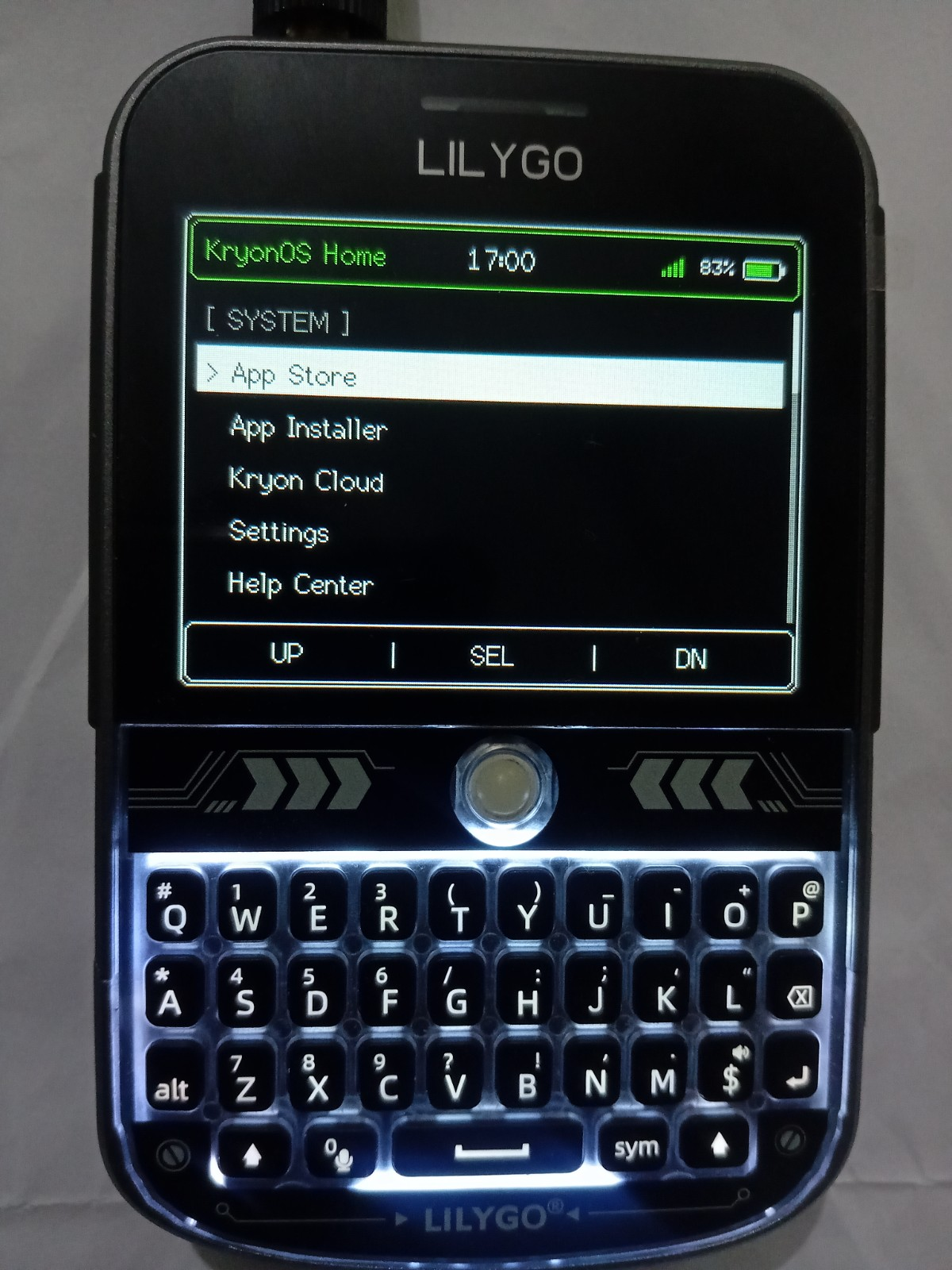
LilyGO T-Deck Plus
The LilyGO T-Deck Plus is one of the supported handheld devices for KryonOS. It combines an ESP32-S3 platform with a touchscreen display, keyboard, and trackball, providing a compact environment for running interactive applications.
Multiple Devices Running KryonOS
KryonOS is designed to support different ESP32-based hardware platforms. Its compatibility allows developers to explore the platform across multiple devices with different form factors and hardware capabilities.
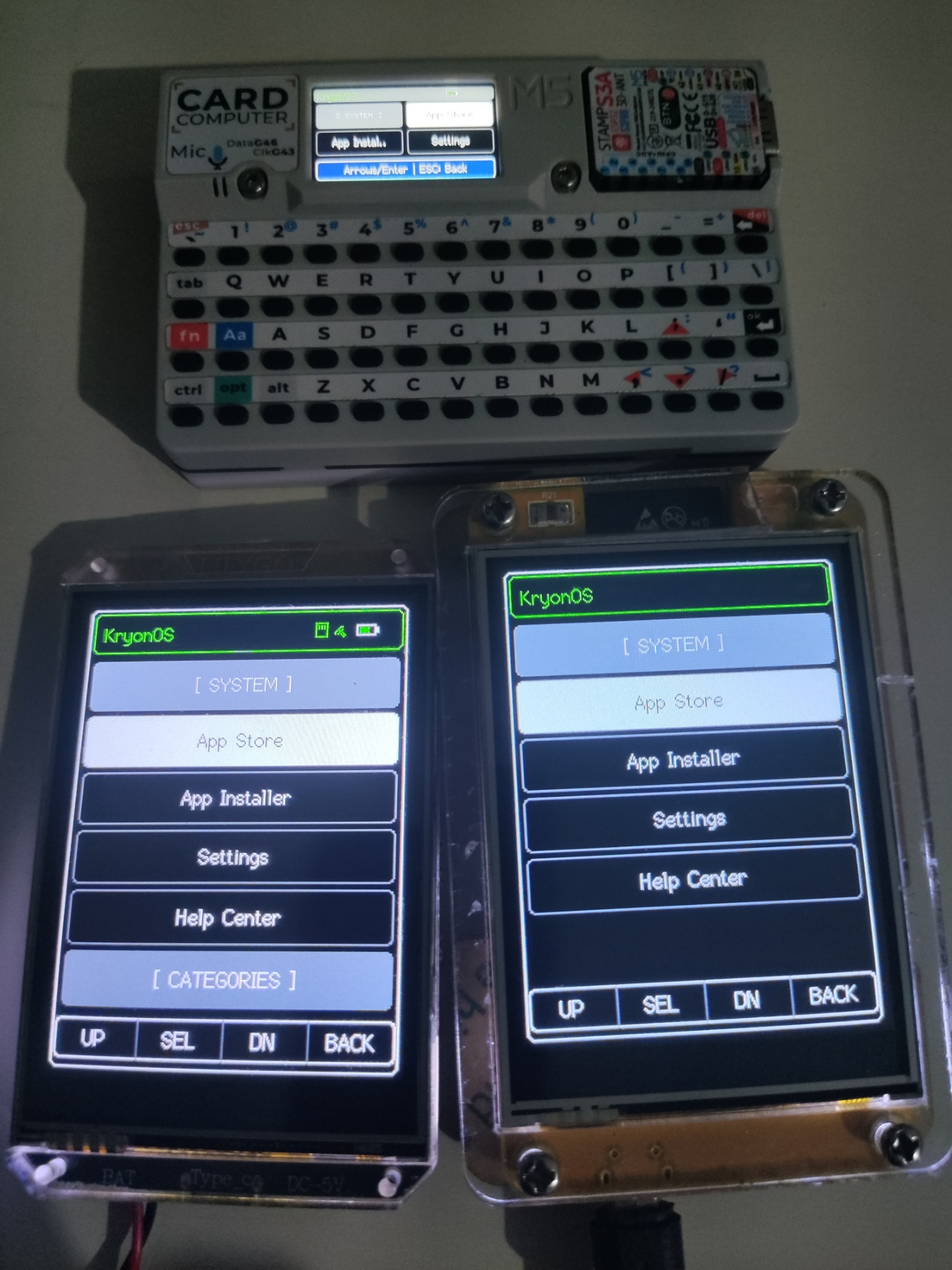
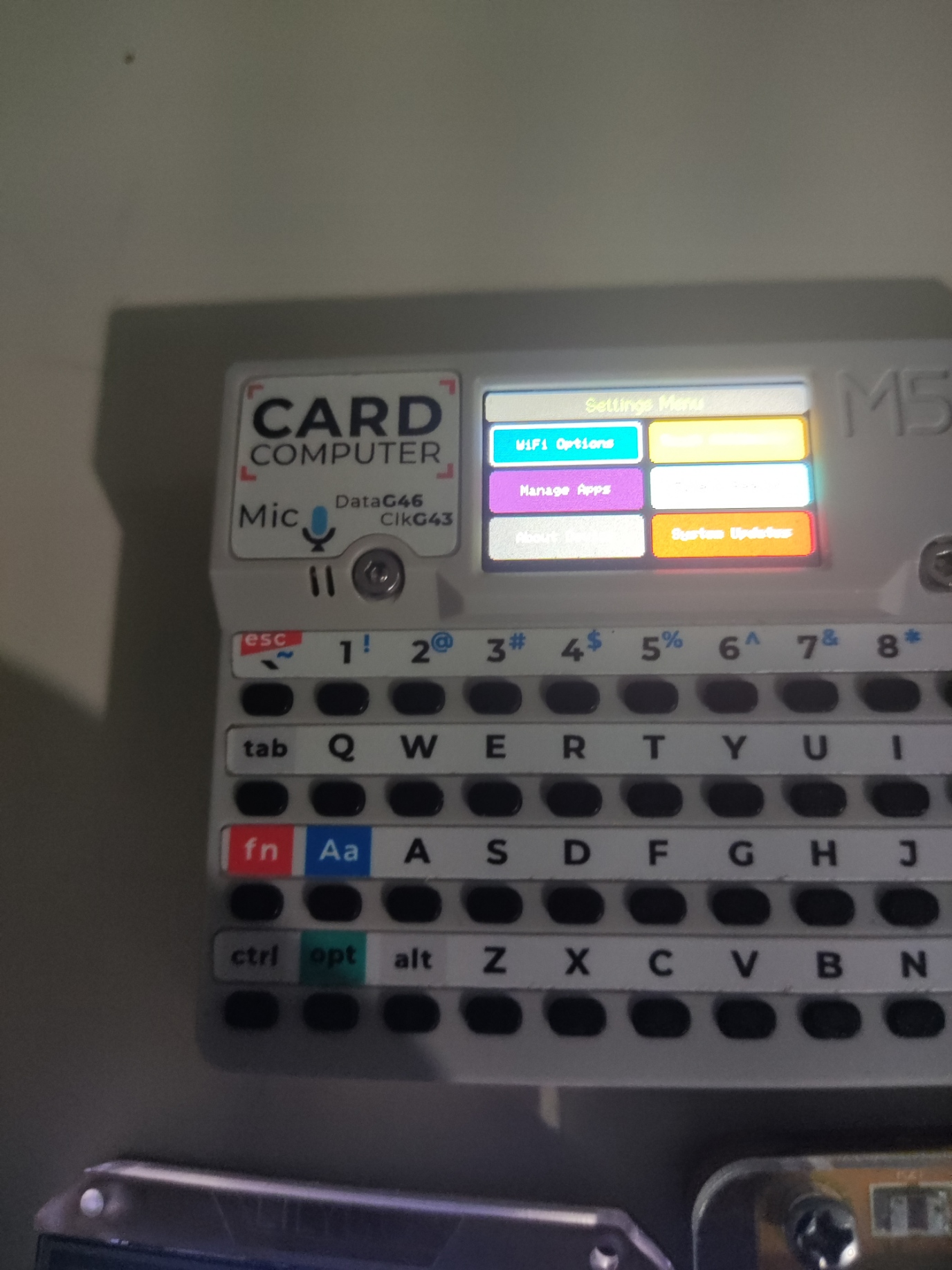
M5Stack Cardputer v1.1
Experimental
The M5Stack Cardputer v1.1 is an experimental hardware target for KryonOS. Its compact design and integrated keyboard make it an interesting platform for exploring portable embedded applications.
LilyGO T-HMI
Experimental
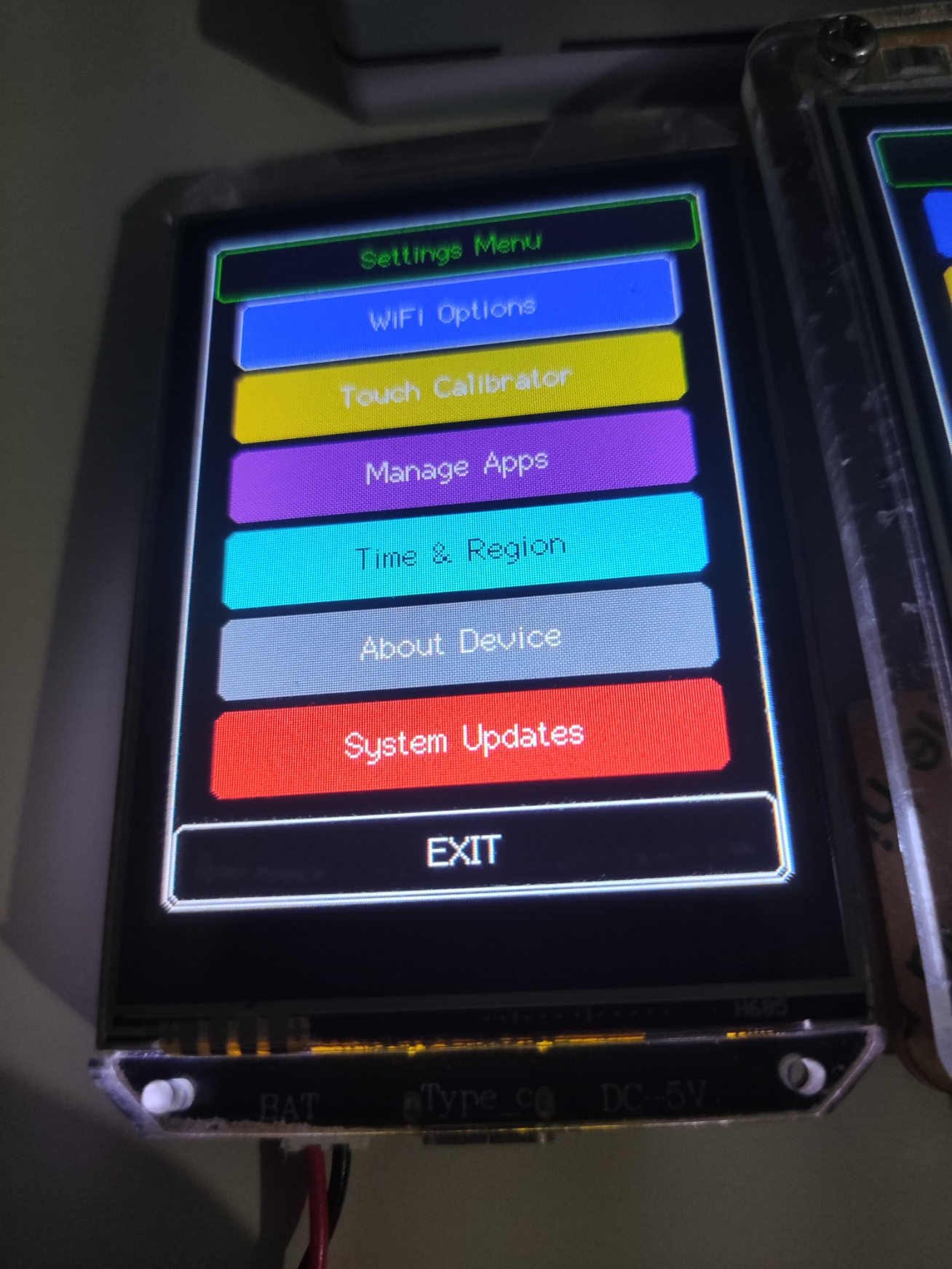
The LilyGO T-HMI is another experimental hardware target for KryonOS. It provides a different hardware configuration and display environment for exploring additional compatibility.
Hardware compatibility depends on the board's specifications, available memory, display, and supported peripherals.
Note on Experimental Boards: Target boards marked as Experimental are implemented at the driver and HAL level but currently lack hands-on physical verification due to unavailable test hardware. If you test or flash KryonOS on these boards and encounter any issues or calibration offsets, please submit an issue on GitHub. Community feedback and contributions for these devices are strongly encouraged!
On-Device Artificial Intelligence
KryonOS is also exploring the possibilities of running artificial intelligence directly on embedded hardware.
By loading binary model files and processing them through native C++ implementations, KryonOS can experiment with local AI capabilities on ESP32-S3 devices equipped with PSRAM.
This makes it possible to explore lightweight AI applications without relying entirely on cloud-based services.
On-device AI is an evolving area of KryonOS development, with further possibilities for experimentation and improvement.
Open Source and Community Driven
KryonOS is an open-source project developed with the goal of making embedded application development more flexible and accessible.
Developers can explore its source code, report issues, suggest features, contribute improvements, and build their own applications.
The project continues to evolve through development, experimentation, and community contributions.
What's Next for KryonOS?
KryonOS is continuously evolving, with ongoing work focused on expanding hardware compatibility, improving JavaScript APIs, enhancing connectivity, introducing new capabilities, and exploring local AI on embedded devices.
The long-term vision is to create a flexible application platform that makes it easier to turn ESP32-based hardware into interactive and programmable devices.
Get Started with KryonOS
Interested in exploring KryonOS or building your own applications?
Here are the official resources:
- Official Website: https://kryonos.harislab.tech/
- Documentation: https://kryonos.harislab.tech/docs
- GitHub Repository: https://github.com/Haris16-code/KryonOS
- Web Flasher: https://kryonos.harislab.tech/flasher
- Community: https://discord.gg/kFvctGJy93
KryonOS is more than traditional ESP32 firmware. It is an evolving platform that brings graphical applications, JavaScript development, and hardware capabilities together in the embedded world.